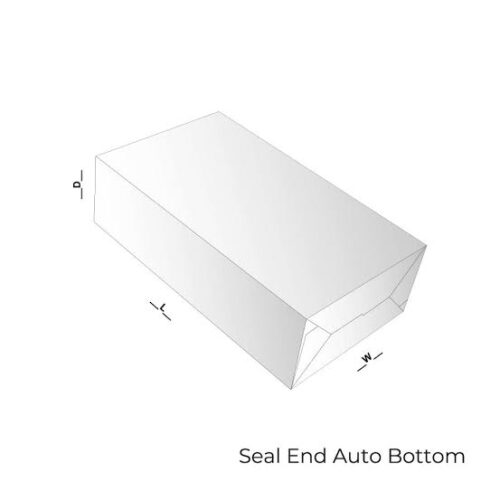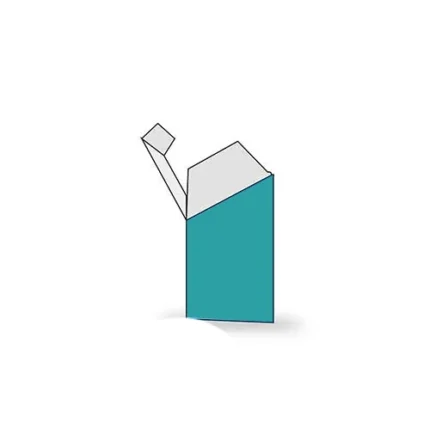
Slope Top Reverse Tuck End

Slope Top Reverse Tuck End

Slope Top Reverse Tuck End is a folding carton structure built with an angled top panel rather than a flat one, engineered specifically around how customers actually view products on a shelf from a standing or walking eye level, combined with the uninterrupted front panel benefit of reverse tuck end construction. Built from durable paperboard and finished with full color printing, this format is common across retail shelf products, counter displays, and premium gift or cosmetic packaging where top panel visibility genuinely matters. Whether you need Custom Slope Top Reverse Tuck End packaging engineered around your specific product and shelf placement, or a broader Custom Boxes production run built on this same structural foundation, this guide explains exactly why the angle exists and where it earns its place.

Get A Custom Quote

Specifications Details
Dimensions
All custom sizes & shapes
Printing
CMYK, PMS, No Printing
Paper Stock
10pt to 28pt (60lb to 400lb) Eco-Friendly Kraft, E-flute Corrugated, Bux Board, Cardstock
Quantities
50 – 500,000,000
Coating
Gloss, Matte, Spot UV
Default Process
Die Cutting, Gluing, Scoring, Perforation
Options
Custom Window Cut Out, Gold/Silver Foiling, Embossing, Raised Ink, PVC Sheet
Proof
Flat View, 3D Mock-up, Physical Sampling (On request)
Turn around Time
7-10 Business Days

Designed for the Angle You Actually See It From

Most packaging design assumes a customer will view a product straight on, eye level, front panel facing directly outward. In real retail environments, that assumption is only sometimes true. Shoppers approach shelves from a walking angle, look slightly downward at products below eye level, and glance across displays rather than stopping to stare directly at each item. Slope Top Reverse Tuck End construction exists specifically because someone noticed this gap between how packaging is typically designed and how it is actually seen.Think about how a lectern or a sloped reading stand tilts a document toward a reader’s natural line of sight, rather than leaving it flat on a table where the reader has to look almost straight down to read it clearly. A Slope Top Reverse Tuck End box applies that same basic optical principle to a retail shelf, angling the top panel so that branding, product information, or secondary graphics remain visible and legible from a realistic shelf browsing angle, rather than disappearing into foreshortened obscurity the way a flat topped box’s upper surface often does.

What Makes a Slope Top Different From a Flat Top Box

The Angled Top Panel

The defining structural feature of this format is straightforward to describe and genuinely useful in practice, the top panel of the box is cut and folded at an angle rather than sitting parallel to the base, creating a visibly sloped surface rather than a flat one. This angle is typically engineered based on the expected shelf height and viewing distance for the specific retail environment the product will sit in.

How This Changes the Tuck End Closure Geometry

Because the top panel sits at an angle rather than flat, the tuck flap closure mechanism needs to be engineered slightly differently than on a standard box, accounting for the angled fold line so the closure still holds securely despite the non standard top geometry. This is a meaningful structural adjustment, not simply a cosmetic tilt applied after the fact to a standard box design.

The Optics Problem This Structure Solves

To understand why this structure genuinely earns its place rather than existing as decorative flair, it helps to think through the specific visibility problem it addresses. A flat topped box sitting on a shelf at or below a typical adult’s eye level presents its top surface at a steep, foreshortened angle from a standing viewer’s perspective, meaning any branding or graphics placed there become difficult to read or may go essentially unnoticed entirely as a shopper walks past.Slope Top Reverse Tuck End construction directly counters this by tilting that same surface toward the viewer, meaningfully improving the legibility and visual impact of whatever design elements sit on the box’s upper panel, without requiring any change to how the product itself is positioned on the shelf. This matters most specifically for products displayed on lower or mid height shelving, where the natural viewing angle problem this structure solves is most pronounced.

Slope Top Reverse Tuck End vs Standard Reverse Tuck End: Combining Two Design Solutions

It is worth being explicit about how this structure relates to standard reverse tuck end construction, since the two solve genuinely different visibility problems that happen to complement each other well. A standard reverse tuck end box solves for an uninterrupted front panel, keeping the flap fold line off the front facing surface so branding and artwork have a clean, unbroken canvas. Slope Top Reverse Tuck End construction takes that same front panel benefit and adds a second visibility solution on top of it, quite literally, angling the top surface to improve its visibility from a realistic shelf viewing angle.Here is a longer point worth sitting with, since it explains why this combination specifically makes sense rather than being an arbitrary design mashup. A box using only standard reverse tuck end construction solves the front panel problem well but leaves its top surface just as visually compromised as any other flat topped carton, meaning a product relying entirely on front panel branding loses any potential top panel visibility advantage entirely, while a box using only a sloped top without the reverse tuck end flap orientation gains the top visibility benefit but sacrifices the clean, uninterrupted front panel that reverse tuck construction specifically provides, meaning Slope Top Reverse Tuck End exists precisely because combining both structural decisions solves two separate, genuinely common retail visibility problems within a single carton design rather than forcing a brand to choose only one.

Where This Structure Shows Up

This combination of features appears most often in categories where shelf visibility genuinely drives purchase decisions and where products are frequently displayed at or below typical eye level.
  • Retail shelf products in lower or mid height placements, where the sloped top’s viewing angle advantage matters most.
  • Counter and point of sale displays, where a slightly tilted top surface naturally draws a shopper’s eye downward toward the product.
  • Premium cosmetic and gift packaging, where the sloped top also creates a distinctive, non standard silhouette that helps a product stand out visually against more conventional flat topped competitors.
  • Multi pack or bundle products, where top panel real estate is often used for secondary promotional messaging that benefits from improved visibility.

Custom Slope Top Reverse Tuck End: What Customization Adds

Custom Slope Top Reverse Tuck End packaging applies the usual layers of customization available across most folding carton categories, dimensional sizing matched to a specific product, full print customization across both the front and angled top panels, and structural refinements like the specific degree of slope angle engineered around a brand’s actual shelf placement and typical customer viewing distance.

Materials and Structural Comparison

FeatureSlope Top Reverse Tuck EndStandard Reverse Tuck EndStandard Flat Top Tuck End Boxes
Front panelUninterrupted, clean branding surfaceUninterrupted, clean branding surfaceInterrupted by fold line
Top panel visibilityAngled toward realistic shelf sightlinesFlat, foreshortened from standing viewFlat, foreshortened from standing view
Best suited forLower and mid shelf products, counter displaysProducts where front panel branding is the priorityGeneral purpose, low visual differentiation needs
Structural complexityHigher, due to angled fold engineeringStandardStandard, most widely available

How Custom Slope Top Reverse Tuck End Boxes Are Manufactured

  1. Viewing angle analysis, determining the appropriate slope angle based on the product’s typical shelf height and expected customer viewing distance.
  2. Structural engineering, calculating precise die line measurements accounting for both the angled top panel and reverse tuck flap orientation working together correctly.
  3. Material selection, choosing board weight capable of holding a crisp, consistent angled fold without warping over time.
  4. Printing, applying brand artwork across both the front and sloped top panels, since both surfaces carry real visual importance in this design.
  5. Die cutting and precision scoring, requiring tighter tolerances than a standard flat top box, since inconsistent angle cutting directly affects both structural integrity and visual consistency across a production run.
  6. Quality inspection, confirming the slope angle forms consistently, the reverse tuck closure functions correctly around the non standard top geometry, and the box maintains structural stability.

Producing at Scale: What Changes as Order Volume Grows

Moving from a small sample order into a full Custom Boxes production run built on this structure raises the stakes on consistency specifically, since maintaining a uniform slope angle across potentially thousands of units matters far more than it would for a standard flat top carton. Even small inconsistencies in the angled fold become visibly noticeable once many units are displayed together on the same shelf, in a way that minor variation on a flat surface simply would not be.

Ordering Checklist for Custom Slope Top Reverse Tuck End Packaging

  1. Confirm your typical shelf placement and viewing conditions, since the ideal slope angle depends on realistic shelf height and customer viewing distance.
  2. Decide how much emphasis your design places on the top panel, since this structure only delivers real value if the top surface actually carries meaningful branding or information.
  3. Request die line prototyping specifically focused on angle consistency, given how much this structure depends on precise, repeatable fold engineering.
  4. Request volume specific quotes if you are planning a full retail rollout across multiple locations.
  5. Request a physical sample and evaluate it from a realistic shelf height and walking distance before committing to full production.
  6. Plan lead times around the additional engineering this structure requires compared to a standard Tuck End Boxes carton.

Sustainability and EEAT: Manufacturing Slope Top Reverse Tuck End Boxes Responsibly

Retail brands increasingly expect transparency around the materials behind even highly specialized carton formats like this one. Choosing a manufacturer that sources FSC certified paperboard and uses soy or water based inks supports both environmental responsibility and long term brand trust, a priority tracked broadly by organizations like the Sustainable Packaging Coalition.Our production process for Custom Slope Top Reverse Tuck End packaging includes structural prototyping to confirm consistent slope angle formation and closure security, proof approval before full production, and quality testing informed by general packaging engineering standards described by organizations such as the Institute of Packaging Professionals. Every order is reviewed by packaging engineers and print production specialists before it ships, ensuring the structure delivers its intended shelf visibility advantage across the full production run.

Frequently Asked Questions

  1. What is a slope top reverse tuck end box? Slope Top Reverse Tuck End describes a folding carton with an angled top panel combined with reverse tuck end flap orientation, engineered to improve top panel visibility from a realistic shelf viewing angle while keeping the front panel free of a visible fold line.
  2. Why would a box need an angled top instead of a flat one? A flat topped box viewed from a typical standing or walking angle often foreshortens or hides whatever branding sits on its top surface, while an angled top tilts that same surface toward a viewer’s natural sightline, meaningfully improving visibility.
  3. How is slope top reverse tuck end different from a standard reverse tuck end box? A standard reverse tuck end box solves for an uninterrupted front panel only, while Slope Top Reverse Tuck End adds a second visibility solution by angling the top panel as well, addressing both front and top panel visibility within one structure.
  4. Where are slope top reverse tuck end boxes most commonly used? This structure is common for retail shelf products displayed at lower or mid shelf height, counter and point of sale displays, and premium cosmetic or gift packaging where a distinctive silhouette also helps a product stand out.
  5. Does the angled top affect how the box closes? Yes. The reverse tuck flap closure needs to be engineered specifically around the angled fold line, which is a genuine structural adjustment rather than a simple cosmetic tilt applied to a standard Tuck End Boxes design.
  6. Is custom slope top reverse tuck end packaging more expensive than a standard box? Generally, yes, due to the additional engineering precision required to form a consistent slope angle and integrate it correctly with the reverse tuck closure mechanism, compared to standard flat top construction.
  7. What should I check before ordering a large production run of this structure? It is worth confirming a supplier’s die cutting precision specifically for angle consistency, since even small inconsistencies become visually noticeable when many units are displayed together on the same shelf.
  8. Can the slope angle be customized for different shelf heights? Yes. Custom Slope Top Reverse Tuck End packaging can be engineered with a slope angle tailored to a specific product’s typical shelf placement and expected customer viewing distance.
  9. How long does it take to produce custom slope top reverse tuck end boxes? Turnaround typically takes somewhat longer than a standard flat top carton, given the additional structural engineering and angle precision testing involved, with standard timelines ranging from a couple of weeks for simpler designs to several weeks for fully custom production with proof approval.

Package for the Angle Your Customer Is Actually Standing At

Most packaging is designed as though every customer will stop, face a product directly, and study it at eye level, which almost never actually happens on a real retail shelf. Slope Top Reverse Tuck End construction starts from a more honest premise, that shoppers walk past shelves at an angle, glance downward at lower placements, and rarely give any single box more than a passing look, then engineers the box’s top surface specifically to perform better under those real conditions. Combined with the uninterrupted front panel benefit of standard reverse tuck construction, this structure solves two separate visibility problems at once, rather than asking a brand to choose between them. From Custom Slope Top Reverse Tuck End packaging engineered around your specific shelf placement to a full Custom Boxes production run built on this same foundation, this format proves that sometimes the most effective design decision in packaging is simply being honest about the angle people actually see it from.Ready to give your product packaging that works with real shelf sightlines instead of against them? Request a free design consultation and prototype quote today, and see how Slope Top Reverse Tuck End construction can put your branding exactly where your customers are already looking.

Professional Support

Support throughout the procedure.

Price Friendly

Cost-effective production processes

All At One Station

Exclusive facilities, services, in one place.

Guaranteed Quality

Special concern towards quality.

Need a Sample?

No problem! We can make you a single custom box with your design and dimensions.