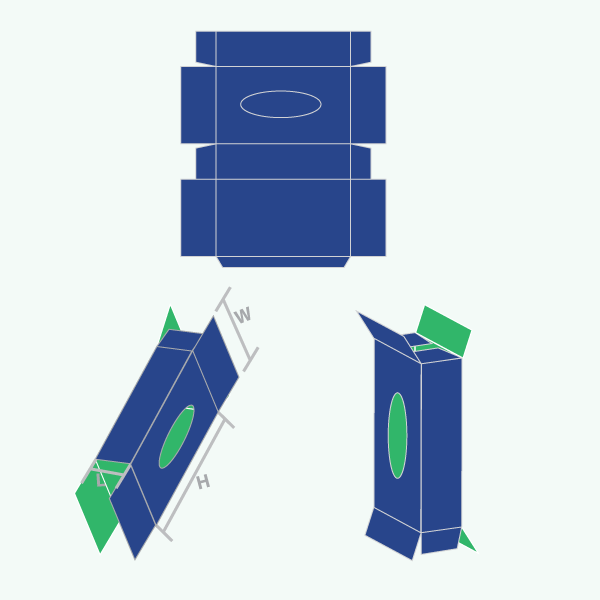
Seal End With Perforated Top

Seal End With Perforated Top

Seal End With Perforated Top is a folding carton structure built for speed at the manufacturing and packing line level, using fully glued end closures instead of foldable tuck flaps, paired with a perforated strip that lets the end customer tear the box open by hand. Seal end with perforated top boxes are common across cereal, frozen food, pharmaceutical, and other high volume categories where automated packing equipment fills and seals cartons without any manual folding step. Whether you need Wholesale seal end with perforated top production for a large scale packaging line or Custom Seal End with Perforated Top packaging built around your specific product dimensions, this guide explains exactly how this structure works and where it delivers real advantages over other carton styles.

Get A Custom Quote

Specifications Details
Dimensions
All custom sizes & shapes
Printing
CMYK, PMS, No Printing
Paper Stock
10pt to 28pt (60lb to 400lb) Eco-Friendly Kraft, E-flute Corrugated, Bux Board, Cardstock
Quantities
50 – 500,000,000
Coating
Gloss, Matte, Spot UV
Default Process
Die Cutting, Gluing, Scoring, Perforation
Options
Custom Window Cut Out, Gold/Silver Foiling, Embossing, Raised Ink, PVC Sheet
Proof
Flat View, 3D Mock-up, Physical Sampling (On request)
Turn around Time
7-10 Business Days

Built for the Machine, Opened by the Hand

Most folding carton discussions focus on how a customer experiences the box, the branding, the unboxing moment, the shelf appeal. Seal End With Perforated Top construction starts from a different point entirely, the manufacturing line itself, and works backward from there to solve the customer access problem afterward.This structure exists because certain high volume production environments cannot afford the time or mechanical complexity of folding a tuck flap for every single unit passing through a packing line. Instead, the carton is designed to be filled and sealed completely shut by automated equipment, glue applied to both ends in a continuous, high speed process, with no folding step required at all. The perforated top is the structure’s answer to an obvious follow up question, if the box is sealed completely shut, how does anyone ever actually open it.

What “Seal End” Actually Means Compared to Tuck End

A standard Tuck End Boxes structure closes through a foldable flap that tucks behind a front or back panel, a mechanism that works well for retail packaging assembled by hand or through moderately paced automated equipment, and that also allows the box to be reopened and reclosed relatively easily after first use.Seal End With Perforated Top construction abandons that folding mechanism entirely. Both ends of the carton are glued completely shut during the manufacturing and packing process, creating a fully sealed structure with no flap to fold or tuck at any point. This is not simply a stylistic choice, it reflects a genuine difference in how the box is meant to be filled, since fully glued seal end construction is specifically suited to high speed automated packing lines that fill and seal cartons continuously without pausing for a folding step.

The Perforated Top: Solving the Sealed Box’s Only Problem

Sealing a box completely shut solves problems for manufacturers and creates exactly one new problem for everyone downstream, a sealed box with no fold to open is, by design, difficult to open at all without damaging it. The perforated top exists specifically to solve this.A perforation is a line of small, closely spaced cuts through the board, weak enough to tear cleanly along a predictable path when pulled, but strong enough to survive normal shipping and handling without tearing prematurely. Positioned correctly, this perforated strip lets a customer open a Seal End With Perforated Top box quickly and predictably by hand, without needing scissors, a knife, or any tool, restoring the easy access that the glued seal construction otherwise eliminates.

Where Seal End With Perforated Top Boxes Show Up

This structure appears disproportionately often in a specific set of product categories, nearly all of which share one thing in common, high volume, high speed packing environments.
  • Breakfast cereal and dry goods, where extremely high production volumes make any manual folding step impractical at scale.
  • Frozen food packaging, where sealed construction also offers a small additional benefit of moisture resistance compared to a tuck flap that could loosen over time.
  • Pharmaceutical and healthcare products, where a fully sealed carton supports tamper evidence expectations that matter significantly in this category.
  • Food service and quick serve packaging, where high volume, repetitive packing lines benefit from the same speed advantages seen in cereal and dry goods production.

Custom Seal End With Perforated Top Packaging: What Custom Actually Adds

Custom Seal End with Perforated Top packaging applies three layers of customization to this base structure, similar to how customization works across most folding carton categories. Dimensional customization sizes the carton precisely to a specific product rather than a generic stock size. Print customization applies brand specific colors, logos, and required product information across the sealed exterior. Perforation placement customization positions the tear strip exactly where it makes the most sense for that specific product’s opening behavior, which is not always in the same location from one product category to the next.Here is a slightly longer point worth understanding, since it affects nearly every decision that follows in this guide. Because the entire structural premise of this box style depends on a machine sealing both ends without any folding step, Custom Seal End with Perforated Top packaging genuinely needs to be engineered around the specific packing equipment a brand is using, not just the product itself, since glue application points, carton feed dimensions, and sealing pressure all vary somewhat across different packing line equipment, meaning a design that works flawlessly on one manufacturer’s automated line may need adjustment before it performs identically on a different production setup.

Tamper Evidence as a Side Benefit

While speed on the packing line is the primary reason this structure exists, fully sealed construction also delivers a meaningful secondary benefit, a genuinely tamper evident package. Because there is no flap to simply lift and reclose, any attempt to open a Seal End With Perforated Top box before the perforation is deliberately torn leaves visible, difficult to disguise damage. This makes the structure a natural fit for pharmaceutical, health, and food safety sensitive categories where tamper evidence carries real importance, alongside its original packing speed advantage.

Materials and Structural Comparison

FeatureSeal End With Perforated TopStandard Tuck End Boxes
Closure methodFully glued at both endsFoldable tuck flap, no adhesive
Packing speedOptimized for high speed automated linesSuited to hand assembly or moderate speed automation
Reopening after first useNot designed for reclosing once perforation is tornCan typically be refolded and reclosed
Tamper evidenceStrong, since any pre perforation opening is visibleLimited, since a tuck flap can be opened and reclosed easily

Wholesale Production for Seal End With Perforated Top Packaging

Wholesale seal end with perforated top production becomes relevant for brands operating at the exact scale this structure was designed for in the first place, high volume, continuous packing line operations. At this scale, consistency in glue application and perforation strength across every single unit matters enormously, since a single production run might represent hundreds of thousands of units moving through an automated line without individual human inspection.

How Custom Seal End With Perforated Top Boxes Are Manufactured

  1. Structural engineering, sizing the carton to fit both the product and the specific packing line equipment that will fill and seal it.
  2. Perforation design, determining tear strip placement and perforation strength appropriate to the board weight and expected handling conditions.
  3. Material selection, choosing board weight based on product weight and any moisture resistance needs.
  4. Printing, applying brand artwork and required product information through offset or flexographic methods suited to high volume production.
  5. Die cutting and scoring, forming the flat blank and creating the fold lines and perforation pattern before shipment to the packing facility.
  6. Quality testing, confirming that the perforation tears cleanly and consistently without either failing prematurely or resisting too much force during intended use.

Ordering Checklist for Custom Seal End With Perforated Top Packaging

  1. Confirm your packing line equipment specifications, since glue application and carton feed requirements vary across different automated systems.
  2. Determine your required perforation strength, balancing shipping durability against ease of opening for the end customer.
  3. Decide whether tamper evidence is a priority, particularly relevant for pharmaceutical, food safety, or health adjacent product categories.
  4. Request wholesale specific quotes if you are operating at the high volume scale this structure is specifically designed for.
  5. Request a physical proof and, where possible, a packing line trial run before committing to full production, since this structure’s performance depends heavily on equipment compatibility.
  6. Plan lead times around your production schedule, since Custom Seal End with Perforated Top packaging often requires closer coordination with your specific packing equipment than a standard folding carton would.

Sustainability and EEAT: Manufacturing Seal End With Perforated Top Boxes Responsibly

Businesses operating high volume packing lines increasingly expect transparency around the materials behind even highly specialized carton formats like this one. Choosing a manufacturer that sources FSC certified paperboard and uses soy or water based inks supports both environmental responsibility and long term operational trust, a priority tracked broadly by organizations like the Sustainable Packaging Coalition.Our production process for Seal End with Perforated Top boxes includes structural prototyping to confirm perforation tear strength and glue seal reliability, proof approval before full production, and quality testing informed by general packaging engineering standards described by organizations such as the Institute of Packaging Professionals. Every order is reviewed by packaging engineers and print production specialists before it ships, ensuring the structure performs consistently across high volume automated packing operations.

Frequently Asked Questions

  1. What does “seal end with perforated top” mean? Seal End With Perforated Top describes a carton structure that is fully glued shut at both ends during manufacturing, with a perforated tear strip added to the top so the end user can still open the sealed package by hand.
  2. How is seal end with perforated top different from a standard tuck end box? A Tuck End Boxes structure closes through a foldable flap with no adhesive, suited to hand assembly or moderate speed automation, while seal end with perforated top boxes are fully glued shut at both ends, designed specifically for high speed automated packing lines.
  3. Why do sealed boxes need a perforation at all? Since a fully glued seal end box has no flap to fold open, the perforated top provides the only practical way for a customer to open the package by hand without tools, restoring easy access that the sealed construction otherwise removes.
  4. What industries commonly use seal end with perforated top boxes? This structure is common across breakfast cereal, frozen food, pharmaceutical, and food service packaging, categories that share high volume, high speed automated packing line production.
  5. Do seal end with perforated top boxes offer tamper evidence? Yes. Because there is no foldable flap to open and reclose, any attempt to open the box before the perforation is torn leaves visible damage, making this structure a natural fit for tamper evidence sensitive categories like pharmaceuticals.
  6. Can custom seal end with perforated top packaging be reclosed after opening? Generally, no. Once the perforation is torn, the structure is not designed to be neatly reclosed the way a tuck end flap can be refolded, since the format prioritizes secure, tamper evident sealing over repeated access.
  7. Does custom seal end with perforated top packaging need to match specific packing equipment? Yes. Because this structure depends on automated equipment to apply glue and seal both ends, Custom Seal End with Perforated Top packaging needs to be engineered around the specific dimensions and mechanics of the packing line equipment it will run on.
  8. How does wholesale seal end with perforated top pricing compare to smaller orders? Wholesale seal end with perforated top pricing typically drops significantly at the high volumes this structure is designed for, though buyers should confirm consistent glue and perforation quality across very large production runs.
  9. How long does it take to produce custom seal end with perforated top boxes? Turnaround depends on order volume and any packing line trial requirements, but standard timelines typically range from about two to three weeks for stock dimensions to several weeks for fully custom structural designs with proof approval and equipment compatibility testing.

Let the Machine Seal It, Let the Customer Tear It Open

Some packaging decisions are about branding, and some are about pure manufacturing logic, and Seal End With Perforated Top construction sits firmly in the second category, built to solve a production speed problem long before anyone thought about how the box would look on a shelf. Whether you are packaging cereal, frozen food, or a pharmaceutical product on a high volume automated line, seal end with perforated top boxes deliver the sealing speed and tamper evidence a tuck flap simply cannot match, while the perforated top quietly solves the one problem that sealing everything shut would otherwise create. From Custom Seal End with Perforated Top packaging engineered around your specific equipment to full Wholesale seal end with perforated top production at scale, this structure proves that sometimes the most important design decision in packaging has nothing to do with what the customer sees first.Ready to match your packing line’s speed with a structure built specifically for it? Request a free design consultation and prototype quote today, and see how Seal End With Perforated Top construction can move as fast as your production line does.

Professional Support

Support throughout the procedure.

Price Friendly

Cost-effective production processes

All At One Station

Exclusive facilities, services, in one place.

Guaranteed Quality

Special concern towards quality.

Need a Sample?

No problem! We can make you a single custom box with your design and dimensions.