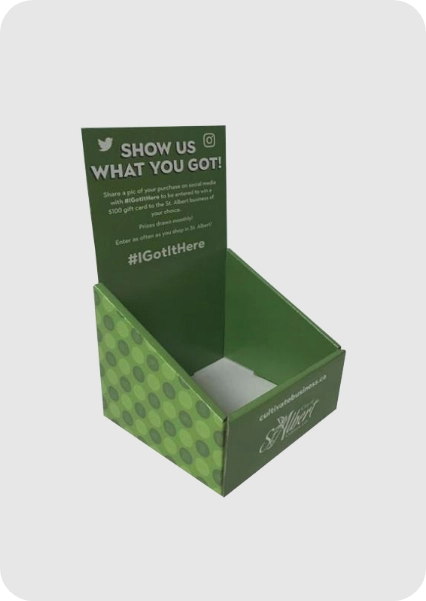
Side Lock Tuck Top Display Box

Side Lock Tuck Top Display Box

Side Lock Tuck Top Display Box packaging is engineered to perform two distinct roles across its working life, arriving at a retailer as a securely closed shipping carton with a standard tuck top closure, then transforming into an open, stable display fixture once the top is removed and interlocking side lock tabs are engaged to hold the structure rigid. Built from durable corrugated or paperboard stock and finished with full color printing, this format is common wherever a product needs to ship efficiently and then display attractively without a separate, dedicated display unit. Whether you need Custom Side Lock Tuck Top Display Box packaging engineered around a specific product, or full Custom Side Lock Tuck Top Display Box packaging production for a retail rollout, this guide explains exactly how the mechanism works and why it matters.

Get A Custom Quote

Specifications Details
Dimensions
All custom sizes & shapes
Printing
CMYK, PMS, No Printing
Paper Stock
10pt to 28pt (60lb to 400lb) Eco-Friendly Kraft, E-flute Corrugated, Bux Board, Cardstock
Quantities
50 – 500,000,000
Coating
Gloss, Matte, Spot UV
Default Process
Die Cutting, Gluing, Scoring, Perforation
Options
Custom Window Cut Out, Gold/Silver Foiling, Embossing, Raised Ink, PVC Sheet
Proof
Flat View, 3D Mock-up, Physical Sampling (On request)
Turn around Time
7-10 Business Days

A Box With Two Jobs: Shipper First, Display Second

Most packaging is designed to do one thing well. A shipping carton protects a product in transit. A display box presents a product attractively on a shelf. Side Lock Tuck Top Display Box construction exists because a lot of retail products genuinely need both of those things from the exact same piece of packaging, without the added cost and complexity of shipping a separate shipping carton and a separate in store display unit.This dual purpose design is sometimes called a shipper display in the broader packaging industry, and the Side Lock Tuck Top Display Box structure is one specific, well engineered way of achieving it, using a tuck top closure for the shipping phase and a side lock mechanism to hold the box rigid once it converts into its open, retail facing display configuration.

The Structural Problem With Most Display Conversions

Here is the engineering challenge that makes this structure worth understanding in detail rather than dismissing as a simple two-in-one gimmick. A standard closed box gets much of its structural rigidity from having all six sides intact, working together to resist bending, crushing, and general handling stress. The moment you cut away a top panel, or a front panel, to create an open display for retail shelf presentation, you remove a meaningful part of that structural support, and a box that was perfectly rigid when closed can suddenly become floppy, prone to sagging, or unstable once opened into display mode.This is a genuinely common failure point for poorly engineered shipper displays, a box that shipped perfectly well and then visibly sags, leans, or loses its shape the moment a store employee opens it up for the shelf, undermining exactly the retail presentation the display was supposed to provide in the first place.

How the Side Lock Mechanism Solves It

What a Side Lock Tab Actually Is

A side lock, in this context, refers to small die cut tabs positioned along the side panels of the box, engineered to interlock or tuck into corresponding slots once the box is opened into its display configuration. Rather than relying purely on the box’s original closed structure for rigidity, these tabs create a new set of structural connection points specifically active during the open, display phase of the box’s life.

How It Interacts With the Tuck Top Closure

During shipping, the tuck top closure does the structural and protective work, keeping the box fully closed and rigid the way any standard folding carton would. Once the box arrives and is prepared for display, the top is opened or removed, and the side lock tabs engage, effectively replacing the structural support that the now absent top panel used to provide. This handoff, from tuck top rigidity during shipping to side lock rigidity during display, is the entire structural logic behind this format.Here is a slightly longer point worth understanding fully, since it explains why this specific combination of features is genuinely well thought out rather than an arbitrary structural mashup. A box relying purely on a tuck top closure with no side lock reinforcement would ship perfectly well but risk exactly the sagging, unstable display problem described above once opened, while a box relying purely on side locks without a proper tuck top closure would display well but lack a secure, tamper resistant closure during the shipping phase when the product most needs protection, meaning Side Lock Tuck Top Display Box construction specifically exists to hand structural responsibility back and forth between two different mechanisms depending on which phase of the box’s working life is actually happening at that moment.

The Tuck Top’s Role: Protection During Shipping, Then Out of the Way

During transit, the tuck top closure on a Side Lock Tuck Top Display Box functions essentially like a standard Tuck End Boxes closure, folding and locking shut without adhesive to protect the contents and maintain the box’s rigid, closed shape through normal handling and stacking. Once the box reaches its retail destination, this same top is designed to be removed cleanly, typically along a pre scored line, transitioning the box out of shipping mode and into its display configuration without requiring tools or leaving a rough, unfinished edge behind.

Custom Side Lock Tuck Top Display Box Packaging: What Customization Adds

Custom Side Lock Tuck Top Display Box packaging applies the usual layers of customization available across most folding carton categories to this specific dual purpose structure. Dimensional customization sizes the box to hold a specific product quantity securely during shipping while still displaying attractively once opened. Print customization applies brand artwork across both the shipping exterior and, importantly, the interior surfaces that only become visible once the box converts to display mode, since those surfaces suddenly matter for branding the moment the top comes off. Structural customization adjusts side lock tab placement and count based on the specific size and weight the open display configuration needs to support.

Where This Structure Shows Up

Side Lock Tuck Top Display Box construction appears most often in retail categories where a single piece of packaging genuinely needs to handle both shipping and shelf presentation without a separate display unit.
  • Grocery and convenience store promotional displays, where retailers want products to arrive ready to place directly on the shelf with minimal additional handling.
  • Seasonal and limited time retail promotions, where the cost of a separate dedicated display unit is harder to justify for a short campaign.
  • Multi unit retail packs, where the box needs to both ship a full case quantity and then present that same quantity attractively once opened.
  • New product launches, where a brand wants strong, consistent shelf presence without requiring retailers to unpack products into a separate display fixture.

Side Lock Tuck Top Display Box vs Standard Tuck End Boxes: Different Purpose Entirely

It is worth being direct about how this structure differs from a standard Tuck End Boxes carton, since the two solve genuinely different problems despite sharing the tuck top closure concept. A standard tuck end box is designed to be opened once by an end consumer and generally is not engineered with any particular concern for what happens to its structural rigidity afterward, since a single consumer opening a single retail unit does not need the box to remain a stable, freestanding structure. A Side Lock Tuck Top Display Box, by contrast, is specifically engineered around the assumption that it will be opened once, at the retail location, and then needs to remain a rigid, stable structure for the entire remaining duration of its shelf life, which is exactly the problem the side lock mechanism exists to solve.

Materials and Structural Comparison

FeatureSide Lock Tuck Top Display BoxStandard Tuck End Boxes
Primary purposeShips closed, then converts to stable open displayShips and is opened once by an end consumer
Structural focusRigid in both closed and open configurationsRigid primarily in closed configuration
Key mechanismTuck top plus side lock tabsTuck top or tuck flap closure alone
Best suited forRetail shipper displays, multi unit promotional packsGeneral retail packaging, single unit products

How Custom Side Lock Tuck Top Display Box Packaging Is Manufactured

  1. Dual configuration engineering, designing the structure to be rigid both when fully closed for shipping and when opened with side locks engaged for display.
  2. Side lock tab placement, positioning and sizing interlocking tabs to provide adequate structural support for the specific weight and size of the open display configuration.
  3. Material selection, choosing corrugated or paperboard stock strong enough to support both the shipping load and the open display’s structural needs.
  4. Printing, applying brand artwork across exterior shipping surfaces and interior display facing surfaces, since both become visible at different points in the box’s life.
  5. Die cutting and scoring, creating precise fold and tear lines for the tuck top removal along with accurately positioned side lock slots and tabs.
  6. Quality testing, confirming the box remains rigid and stable once converted to display mode, not just when fully closed for shipping.

Ordering Checklist for Custom Side Lock Tuck Top Display Box Packaging

  1. Confirm your product quantity and weight for both the shipping and open display configurations.
  2. Plan your interior display artwork separately from your exterior shipping artwork, since both become visible at different stages.
  3. Ask your supplier specifically about display stability testing, not just standard shipping durability testing, given this structure’s dual purpose design.
  4. Confirm your retail timeline, since display stability needs to hold up for the entire duration your product will realistically remain on shelf.
  5. Request a physical sample and test both configurations yourself, opening it into display mode to confirm real world stability before committing to full production.
  6. Consider volume pricing if you are planning a full retail rollout across multiple locations, since larger production runs of Custom Boxes built on this structure typically improve per unit cost.

Sustainability and EEAT: Manufacturing Side Lock Tuck Top Display Box Packaging Responsibly

Retail brands increasingly expect transparency around the materials behind even highly specialized dual purpose packaging like this one. Choosing a manufacturer that sources FSC certified paperboard and uses soy or water based inks supports both environmental responsibility and long term brand trust, a priority tracked broadly by organizations like the Sustainable Packaging Coalition.Our production process for Custom Side Lock Tuck Top Display Box packaging includes structural prototyping to confirm rigidity in both closed and open configurations, proof approval before full production, and quality testing informed by general packaging engineering standards described by organizations such as the Institute of Packaging Professionals. Every order is reviewed by packaging engineers and print production specialists before it ships, ensuring the structure performs reliably across its entire working life, from warehouse to retail shelf.

Frequently Asked Questions

  1. What is a side lock tuck top display box? Side Lock Tuck Top Display Box describes a folding carton built to ship securely closed with a standard tuck top closure, then convert into a stable, structurally rigid open display using interlocking side lock tabs once it reaches its retail destination.
  2. Why do display boxes need a side lock mechanism at all? Removing a top or front panel to create an open display typically removes some of the structural rigidity a closed box relies on, and the side lock mechanism replaces that lost support, preventing the box from sagging or losing its shape once opened.
  3. How is this structure different from a standard tuck end box? A standard Tuck End Boxes carton is designed primarily to be opened once by an end consumer, while a Side Lock Tuck Top Display Box is specifically engineered to remain a rigid, stable structure for its entire shelf life after being opened into display mode.
  4. Where is this type of display box commonly used? This structure is common for grocery and convenience store promotional displays, seasonal retail campaigns, multi unit retail packs, and new product launches where strong shelf presence matters without a separate dedicated display fixture.
  5. Does the interior of the box need to be printed too? Yes, typically. Since the interior display facing surfaces become visible only after the top is removed, Custom Side Lock Tuck Top Display Box packaging often needs brand artwork applied to both exterior shipping surfaces and interior display surfaces.
  6. Is custom side lock tuck top display box packaging more expensive than a standard shipping carton? Generally, yes, due to the additional engineering required to ensure structural rigidity in both the closed and open configurations, along with the added printing considerations for interior display surfaces.
  7. How do I know if a side lock tuck top display box design will actually stay stable once opened? Requesting a physical sample and testing the open display configuration yourself, rather than relying solely on a flat proof or digital mockup, is the most reliable way to confirm real world stability before committing to full production.
  8. Can this structure be sized for different product quantities? Yes. Custom Side Lock Tuck Top Display Box packaging can be engineered around a specific product quantity and weight, with side lock tab placement adjusted to provide adequate support for that specific configuration.
  9. How long does it take to produce custom side lock tuck top display box packaging? Turnaround typically takes somewhat longer than a standard tuck end carton, given the additional structural engineering and dual configuration testing involved, with standard timelines ranging from a couple of weeks for simpler designs to several weeks for fully custom production with proof approval.

One Box, Two Jobs, Zero Compromises

Most packaging has to choose between being built for shipping or built for display, and settling for whichever one it does slightly better. Side Lock Tuck Top Display Box construction refuses that tradeoff entirely, using a tuck top closure to handle the shipping phase properly and a side lock mechanism to take over structural responsibility the moment the box opens into its retail display life, so neither phase gets shortchanged by the other. For grocery promotions, seasonal campaigns, multi unit retail packs, or any product launch where a single piece of packaging needs to ship well and then hold its shape on a shelf for weeks, this structure earns its slightly more complex engineering by simply doing both jobs properly. From Custom Side Lock Tuck Top Display Box designs engineered around your specific product to full Custom Side Lock Tuck Top Display Box packaging production for a retail rollout, this format proves a box can genuinely have two working lives without failing at either one.Ready to give your product packaging that ships secure and displays strong, without needing two separate solutions? Request a free design consultation and prototype quote today, and see how Side Lock Tuck Top Display Box construction can handle both jobs at once.

Professional Support

Support throughout the procedure.

Price Friendly

Cost-effective production processes

All At One Station

Exclusive facilities, services, in one place.

Guaranteed Quality

Special concern towards quality.

Need a Sample?

No problem! We can make you a single custom box with your design and dimensions.