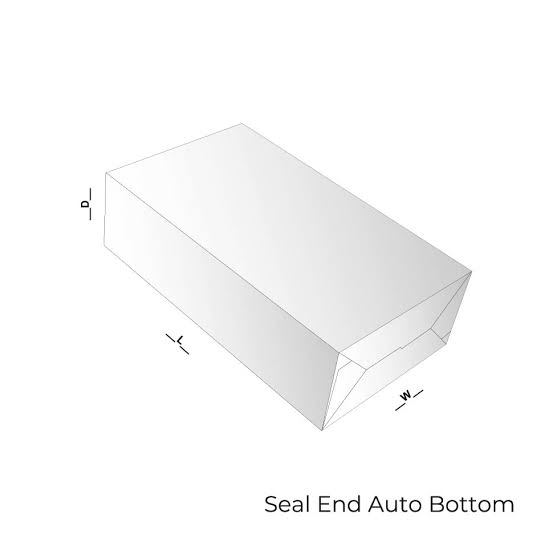
Custom Seal End Auto Bottom

Custom Seal End Auto Bottom

Custom Seal End Auto Bottom packaging combines two fully automated closure mechanisms in one structure, a completely glued seal end top and a pre glued, self locking auto bottom base, removing any manual folding step at either end of the box during production. Built from durable corrugated or paperboard stock, this format ranges from a single custom seal end auto bottom boxes design for one high volume product line to full Custom Seal End Auto Bottom Wholesale production for the most demanding automated packing environments. This guide explains exactly what sets this combination apart from every other auto bottom variant, and honestly addresses when it genuinely makes sense versus when a simpler alternative fits better.

Get A Custom Quote

Specifications Details
Dimensions
All custom sizes & shapes
Printing
CMYK, PMS, No Printing
Paper Stock
10pt to 28pt (60lb to 400lb) Eco-Friendly Kraft, E-flute Corrugated, Bux Board, Cardstock
Quantities
50 – 500,000,000
Coating
Gloss, Matte, Spot UV
Default Process
Die Cutting, Gluing, Scoring, Perforation
Options
Custom Window Cut Out, Gold/Silver Foiling, Embossing, Raised Ink, PVC Sheet
Proof
Flat View, 3D Mock-up, Physical Sampling (On request)
Turn around Time
7-10 Business Days

The Fully Automated Box: When Neither End Needs a Human Hand

Every variant in the broader auto lock bottom family solves a version of the same problem, removing friction from the assembly process by eliminating the manual folding step a standard bottom construction requires. Most of those variants, however, still pair that fast bottom with a foldable tuck top closure, a mechanism that, while quick and tool free, generally still involves some manual or semi automated folding action at the point of closure.Custom Seal End Auto Bottom construction removes that remaining manual step entirely. Pairing a fully glued seal end top, sealed shut by automated equipment during the packing process itself, with the same pre glued, self locking auto bottom base found across the broader family, this specific combination creates a structure where genuinely neither end requires a human hand to fold, tuck, or close anything at all during high speed production.

What Makes This Combination Different From Every Other Auto Bottom Variant

It is worth being direct about how this specific pairing differs from the tuck top auto bottom variants discussed in related guides. Those structures pair the same fast, self locking base with a standard foldable tuck top, a mechanism well suited to businesses of nearly any scale, from a small operation hand assembling a modest number of daily orders to a mid sized warehouse running moderately paced automated equipment. Custom Seal End Auto Bottom construction instead pairs that same base with a fully glued seal end top, a closure mechanism specifically built for continuous, high speed automated packing lines that fill and seal cartons without pausing for any folding step whatsoever, at either end of the box.

The Seal End Top: Fully Glued, Fully Automated

The top closure in seal end auto bottom boxes works by gluing both panels of the top completely shut during the automated filling and sealing process, creating a structure with no foldable flap at all. This mechanism, covered in greater structural depth in a dedicated guide focused specifically on seal end construction, typically requires a perforated tear strip to restore easy opening access for the end customer, since a fully glued closure otherwise offers no obvious way to open the box by hand.

Pairing It With Auto Bottom: Removing the Last Manual Step

Here is a longer point worth understanding fully, since it explains exactly why this specific pairing represents something close to the logical endpoint of the entire auto lock bottom family’s core mission. If the fundamental goal behind every auto lock bottom variant is removing manual folding friction from the packing process, then pairing that fast, self locking base with a foldable tuck top, however quick that fold might be, still leaves one manual or semi automated action somewhere in the process, while pairing that same base with a fully glued seal end top removes that final remaining manual step entirely, meaning Custom Seal End Auto Bottom construction is specifically the combination a business reaches for once its production volume and automation infrastructure have scaled to the point where even a quick, simple top fold represents a meaningful bottleneck across thousands or tens of thousands of units moving through a packing line continuously, a genuinely different scale of operation than most businesses using a standard tuck top auto bottom variant are actually operating at.

Tamper Evidence at Both Ends

Beyond pure automation speed, this combination also delivers a genuine tamper evidence benefit that a tuck top variant cannot fully replicate. Because the seal end top has no foldable flap that can simply be lifted and reclosed, any attempt to open the box before its perforated tear strip is deliberately used leaves visible, difficult to disguise damage, a meaningful advantage for pharmaceutical, food safety, or other tamper sensitive product categories that also happen to require the assembly speed this base construction provides.

Where This Combination Actually Makes Sense

Custom Seal End Auto Bottom construction earns its place specifically in a narrower set of circumstances than the broader auto lock bottom family generally.
  • Continuous, fully automated packing lines, where equipment fills and seals both ends of the box without any manual intervention at any point in the process.
  • Very high volume production, where even a brief manual top fold, multiplied across enormous unit counts, represents a genuine bottleneck worth engineering around entirely.
  • Tamper sensitive product categories, particularly pharmaceutical and food safety applications where a fully sealed top’s inherent tamper evidence matters as much as packing speed.
For businesses operating at more moderate volume, or without fully automated packing equipment capable of handling a seal end top specifically, a standard tuck top auto bottom variant typically remains the more practical, accessible choice, offering most of the same base assembly speed without requiring the specific automated sealing equipment a seal end top depends on.

Custom Seal End Auto Bottom: What Customization Adds

Custom Seal End Auto Bottom production applies dimensional sizing matched to your specific product and packing equipment, board weight selected appropriately for both the sealed top and self locking base construction, and full color printing across the exterior, ensuring full automation compatibility does not come at the cost of genuine brand presentation.

Structural Foundations: Tuck End and Custom Boxes

Custom Seal End Auto Bottom construction represents a genuinely different closure philosophy than standard Tuck End Boxes, trading the foldable, reopenable tuck flap for a fully glued, tamper evident seal end closure, while still sharing the broader auto lock bottom family’s core base mechanism. Custom Boxes serves as the umbrella term covering this and every other structural combination a business might choose based on their specific automation infrastructure and product handling needs.

Materials and Structural Comparison

FeatureCustom Seal End Auto BottomTuck Top Auto Bottom
Top closureFully glued, sealed by automated equipmentFoldable tuck flap, manual or semi automated
Manual folding requiredNone, at either endMinimal, typically just the top fold
Tamper evidenceStrong, inherent to sealed constructionLimited, since a tuck flap can be reopened
Best suited forContinuous, fully automated high volume linesModerate volume, hand assembly through moderate automation

How Custom Seal End Auto Bottom Boxes Are Manufactured

  1. Equipment compatibility assessment, confirming the intended packing line can handle both the seal end top’s automated gluing process and the auto lock bottom’s self forming base.
  2. Structural engineering, sizing both closure mechanisms to fit the specific product and packing equipment configuration.
  3. Material selection, choosing board weight appropriate to support both the sealed top and self locking base construction reliably.
  4. Printing, applying brand artwork and required product information through offset or flexographic methods suited to high volume production.
  5. Die cutting, scoring, and pre gluing, forming the flat blank, including the perforated tear strip for the seal end top and the pre glued auto lock bottom panels.
  6. Quality testing, confirming the top seals and tears cleanly, and the bottom locks flat and holds weight reliably, across a representative production sample.

Custom Seal End Auto Bottom Wholesale: Production at Scale

Custom Seal End Auto Bottom Wholesale production represents this structure’s natural home, since the combination genuinely earns its engineering complexity specifically at the high volume scale this closure and base pairing was designed around. At this scale, consistency across both the sealing mechanism and the self locking base matters enormously, since a single production run may represent hundreds of thousands of units moving through continuous automated equipment without individual inspection.

Ordering Checklist for Custom Seal End Auto Bottom Packaging

  1. Confirm your packing line equipment can handle both mechanisms, since this structure depends specifically on automated sealing capability at the top in addition to the self locking base.
  2. Assess whether your actual production volume justifies this level of automation, since moderate volume operations often find a tuck top auto bottom variant more practical.
  3. Determine your tamper evidence requirements, particularly relevant for pharmaceutical or food safety sensitive product categories.
  4. Request volume specific quotes for Custom Seal End Auto Bottom Wholesale production, since this structure’s economics improve significantly at genuine scale.
  5. Request a physical sample and packing line trial before committing to full production, given this structure’s dependency on specific automated equipment.
  6. Confirm perforation tear strength balances shipping durability against ease of opening for the end customer.

Sustainability and EEAT: Manufacturing Custom Seal End Auto Bottom Boxes Responsibly

Businesses operating high volume, fully automated packing lines increasingly expect transparency around the materials behind even highly specialized carton formats like this one. Choosing a manufacturer that sources FSC certified paperboard and uses soy or water based inks supports both environmental responsibility and long term operational trust, a priority tracked broadly by organizations like the Sustainable Packaging Coalition.Our production process for Custom Seal End Auto Bottom packaging includes structural prototyping to confirm sealing reliability, perforation tear strength, and base locking performance, proof approval before full production, and quality testing informed by general packaging engineering standards described by organizations such as the Institute of Packaging Professionals. Every order is reviewed by packaging engineers before it ships.

Frequently Asked Questions

  1. What is a custom seal end auto bottom box? Custom Seal End Auto Bottom construction combines a fully glued, seal end top closure with a pre glued, self locking auto bottom base, meaning neither end of the box requires manual folding during high speed automated production.
  2. How is this different from a standard tuck top auto bottom box? A tuck top auto bottom box pairs the same fast, self locking base with a foldable tuck top closure that still involves some manual or semi automated folding step, while Custom Seal End Auto Bottom construction removes that remaining manual step entirely by using a fully glued top instead.
  3. Does a seal end auto bottom box offer tamper evidence? Yes. Because the seal end top has no foldable flap that can be opened and reclosed, any attempt to open the box before its perforated tear strip is used leaves visible damage, offering meaningful tamper evidence.
  4. Who actually needs custom seal end auto bottom construction? This combination makes the most sense for businesses running continuous, fully automated packing lines at very high volume, or for tamper sensitive categories like pharmaceutical or food safety products, rather than moderate volume operations.
  5. Is a seal end auto bottom box more expensive than a tuck top auto bottom box? Generally, yes, due to the additional engineering required for both fully automated closure mechanisms working together, though the economics typically improve significantly at the genuinely high volume this structure is designed for.
  6. Can a smaller business use custom seal end auto bottom construction? It is possible, but a standard tuck top auto bottom variant is typically more practical and accessible for smaller or moderate volume operations, since seal end construction depends specifically on automated sealing equipment capable of handling that closure mechanism.
  7. How does custom seal end auto bottom wholesale pricing work? Custom Seal End Auto Bottom Wholesale pricing typically improves significantly at the high volumes this structure is designed for, though buyers should confirm consistent sealing and base locking performance across very large production runs.
  8. What is the difference between seal end auto bottom boxes and Tuck End Boxes generally? Seal end auto bottom boxes use a fully glued, non reopenable top closure, while Tuck End Boxes describes a broader family of foldable, reopenable tuck flap closures, a fundamentally different closure philosophy.
  9. How long does it take to produce custom seal end auto bottom boxes? Turnaround typically takes longer than a standard tuck top auto bottom order, given the additional structural engineering and packing line equipment compatibility testing involved, with standard timelines ranging from a few weeks for simpler designs to longer for fully custom, high volume wholesale production with proof approval.

Built for the Line That Never Stops Moving

Most packaging still asks for a moment of human attention somewhere in the process, a fold, a tuck, a quick manual step that seems trivial in isolation but adds up across enough volume. Custom Seal End Auto Bottom construction is built for the specific operations where that assumption no longer holds, pairing a fully glued, tamper evident top with a self locking base so that neither end of the box asks anything of a human hand at any point in a continuous, high speed packing process. This is not the right choice for every business, and honestly, most operations are better served by a simpler tuck top auto bottom variant, but for the genuinely high volume, fully automated lines this structure was engineered around, it represents the furthest a box can go toward removing friction entirely.Ready to find out whether your production volume has reached the point where this level of automation genuinely pays for itself? Request a free design consultation and prototype quote today, and see how Custom Seal End Auto Bottom construction can keep your line moving without a single manual fold slowing it down.

Professional Support

Support throughout the procedure.

Price Friendly

Cost-effective production processes

All At One Station

Exclusive facilities, services, in one place.

Guaranteed Quality

Special concern towards quality.

Need a Sample?

No problem! We can make you a single custom box with your design and dimensions.