Custom Tuck End Boxes

Custom Tuck End Boxes

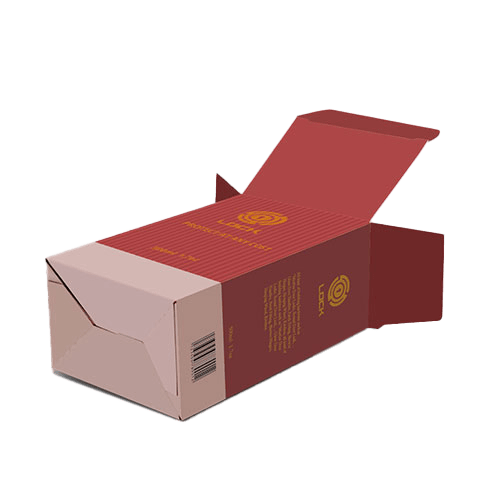
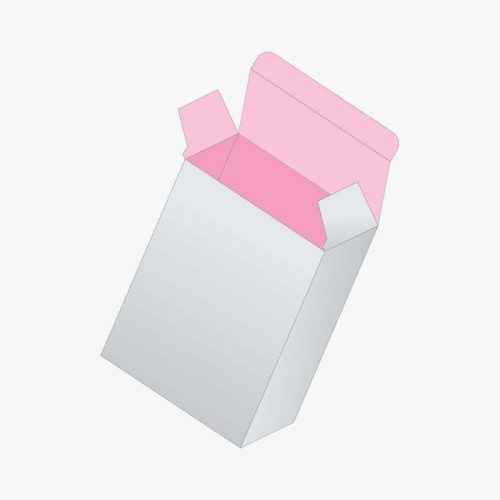
Custom Tuck End Boxes describe a family of folding carton structures unified by one shared trait, a tool free, foldable closure that locks shut without tape or adhesive. Within that family, several distinct variations exist, including the standard straight tuck end box, the branding forward reverse tuck end boxes, and reinforced options like the roll end tuck front box and roll end tuck top boxes. This guide walks through each structure individually, then compares them side by side, so you can order custom tuck end boxes with confidence rather than uncertainty about which specific style your product actually needs.

Get A Custom Quote

Specifications Details
Dimensions
All custom sizes & shapes
Printing
CMYK, PMS, No Printing
Paper Stock
10pt to 28pt (60lb to 400lb) Eco-Friendly Kraft, E-flute Corrugated, Bux Board, Cardstock
Quantities
50 – 500,000,000
Coating
Gloss, Matte, Spot UV
Default Process
Die Cutting, Gluing, Scoring, Perforation
Options
Custom Window Cut Out, Gold/Silver Foiling, Embossing, Raised Ink, PVC Sheet
Proof
Flat View, 3D Mock-up, Physical Sampling (On request)
Turn around Time
7-10 Business Days

The Tuck End Family Tree: One Category, Several Structures

Ask ten people what a tuck end box looks like and most will picture the same general idea, a folding carton with flaps that tuck closed without glue or tape. That mental picture is accurate as far as it goes, but it also hides real structural variety. Depending on which direction the flaps fold, whether the edges are reinforced, and where exactly the box closes, a custom tuck end boxes order can mean several meaningfully different products.This guide treats those differences seriously rather than glossing over them, because choosing the wrong variant, even within the same broad tuck end family, can mean paying for reinforcement your product does not need, or missing reinforcement it does.

Straight Tuck End: The Original, Most Common Structure

A straight tuck end box, sometimes simply called a straight tuck box, is the baseline structure most people picture when they hear “tuck end” at all. Both the top and bottom flaps fold and tuck in from the same side of the carton, creating a simple, predictable closure that has been a packaging standard for decades.This structure is the default choice for a reason. It is well understood by virtually every packaging supplier, assembles quickly, and works reliably across an enormous range of lightweight to moderately heavy products. Unless a specific branding or durability need points toward one of the other structures below, a standard tuck end box remains a safe, cost predictable option.

Reverse Tuck End: Solving for an Uninterrupted Front Panel

Reverse tuck end boxes, and their fully bespoke counterpart, custom reverse tuck end boxes or custom reverse tuck boxes, flip the flap orientation so the top flap tucks in from one side while the bottom flap tucks in from the opposite side. This reversal keeps the front panel free of a visible fold line, giving brands a clean, uninterrupted surface for artwork, photography, or bold typography.This structure is frequently chosen by cosmetics, food, and supplement brands specifically because that unbroken front panel supports stronger, more image forward branding than a straight tuck end box allows.

Roll End Tuck Front: Reinforcement Where Boxes Take the Most Damage

A roll end tuck front box, sometimes described as a roll end front tuck box, adds a rolled, doubled top edge for crush resistance, paired with a closure that tucks in from the front panel rather than the top. This structure exists specifically to solve for the top edge crushing risk that heavier or tall stacked products face during shipping and warehouse storage, a risk that a standard tuck end box does not address.Products with more weight, denser packaging requirements, or longer shipping distances often benefit meaningfully from this added edge reinforcement compared to a standard structure.

Roll End Tuck Top: Reinforcement at the Opening Itself

Roll end tuck top boxes, and their fully custom version, custom roll end tuck top boxes, apply that same rolled edge reinforcement concept directly to the top opening of the box, rather than shifting the closure to the front panel. This keeps the closure location familiar, similar to a standard tuck end box, while still gaining the crush resistant benefit of a rolled, doubled edge exactly where the box is opened and closed most frequently.This structure is often chosen when a product needs edge reinforcement specifically at the opening point, such as items that are opened and reclosed repeatedly during retail handling or repeated access, rather than products where front panel branding space is the primary concern.

Side by Side: Comparing All Four Tuck End Structures

StructureFlap OrientationReinforcementBest Suited For
Straight tuck end boxTop and bottom flaps fold from the same sideNone beyond standard board weightGeneral purpose, lightweight to moderate weight products
Reverse tuck end boxesTop and bottom flaps fold from opposite sidesNone beyond standard board weightProducts prioritizing an uninterrupted front panel for branding
Roll end tuck front boxCloses from the front panelRolled, reinforced top edgeHeavier products, tall stacking, longer shipping distances
Roll end tuck top boxesCloses from the top, similar to straight tuckRolled, reinforced top edge at the openingProducts opened and reclosed repeatedly, needing edge durability at the access point

How to Choose the Right Tuck End Structure for Your Product

  1. Start with branding priorities. If an uninterrupted front panel matters more than anything else, reverse tuck end boxes are worth prioritizing over a standard structure.
  2. Consider product weight and stacking. Heavier products or tall warehouse stacking configurations benefit from the reinforced edge in either a roll end tuck front box or roll end tuck top boxes design.
  3. Think about how often the box gets opened. Products accessed repeatedly, rather than opened once at final use, may benefit specifically from reinforcement at the top opening, pointing toward a roll end tuck top structure.
  4. Default to simplicity when in doubt. For lightweight, straightforward products without a strong branding or durability driver, a standard straight tuck box remains the most cost predictable and widely available option.
  5. Remember these are not mutually exclusive across a product line. Many brands use a straight tuck end box for simpler SKUs and reserve custom roll end boxes or reverse tuck structures for flagship products needing extra reinforcement or branding space.

Custom Production: What “Custom” Adds to Any Tuck End Style

Every structure described above can be produced as a stock, generic size, or as custom tuck end boxes built specifically around a product’s exact dimensions, branding, and finish requirements. The word “custom” in Custom Tuck End Boxes generally refers to three layers of customization that can be applied independently or together.
  • Dimensional customization, sizing the box precisely to a specific product rather than the closest available stock size.
  • Print customization, applying brand specific colors, logos, and artwork rather than a plain or minimally branded surface.
  • Structural customization, choosing among the straight, reverse, and roll end variations discussed above, or combining features like dust flaps for additional interior protection.
A supplier offering true Custom Boxes production should be able to apply any combination of these three customization layers to whichever base structure fits your product.

Manufacturing Process Overview for Custom Tuck End Boxes

  1. Structural engineering, selecting and precisely measuring the die line for whichever tuck end variant fits the product, whether that is a straight tuck end box or a reinforced roll end tuck front box.
  2. Material selection, choosing board weight based on product weight and the specific structural style’s reinforcement needs.
  3. Printing, applying brand artwork through offset, digital, or flexographic methods depending on order volume.
  4. Die cutting and forming, cutting the flat shape and, for roll end variants, forming the reinforced rolled edge during this stage.
  5. Gluing the side seam, creating the flat, foldable tube shape common to nearly all tuck end boxes regardless of specific variant.
  6. Quality inspection, confirming that flaps tuck securely and, where applicable, that rolled edges hold their shape under compression.

Sustainability and EEAT: Manufacturing Custom Tuck End Boxes Responsibly

Businesses across every industry using Custom Tuck End Boxes increasingly expect transparency around the materials behind even standard packaging formats. Choosing a manufacturer that sources FSC certified paperboard and uses soy or water based inks supports both environmental responsibility and long term brand trust, a priority referenced broadly by organizations like the Sustainable Packaging Coalition.Our production process for every variant discussed in this guide, from a standard straight tuck box to fully custom reverse tuck end boxes or custom roll end tuck top boxes, includes die line prototyping to confirm structural fit and closure security, proof approval before full production, and quality testing informed by general packaging engineering standards described by organizations such as the Institute of Packaging Professionals. Every order is reviewed by packaging engineers and print production specialists before it ships.

Frequently Asked Questions

  1. What is the difference between a tuck end box and a reverse tuck end box? A standard tuck end box has both flaps folding from the same side, while reverse tuck end boxes have flaps folding from opposite sides, keeping the front panel free of a visible fold line for cleaner branding.
  2. What is a straight tuck end box? A straight tuck end box, also called a straight tuck box, is the most common folding carton structure, where the top and bottom flaps both tuck in from the same side of the box.
  3. What is the difference between roll end tuck front and roll end tuck top boxes? A roll end tuck front box closes from the front panel while reinforcing the top edge with a rolled, doubled fold, while roll end tuck top boxes keep the closure at the top opening itself while still applying that same reinforced rolled edge.
  4. Which tuck end structure is best for heavier products? Heavier or tall stacked products generally benefit from either a roll end tuck front box or roll end tuck top boxes, since both include a reinforced rolled edge that resists crushing better than a standard straight tuck end box.
  5. Can I mix different tuck end structures across one product line? Yes. Many brands use a straight tuck box for simpler, lighter SKUs and reserve custom roll end boxes or custom reverse tuck end boxes for flagship products needing extra branding space or structural reinforcement.
  6. What does “custom” actually change on a tuck end box? “Custom” in Custom Tuck End Boxes typically refers to dimensional sizing matched to a specific product, full print customization with brand artwork, or structural customization choosing among the straight, reverse, and roll end variants.
  7. Are reverse tuck end boxes more expensive than straight tuck end boxes? Pricing is generally similar between the two, though custom reverse tuck boxes can occasionally require slightly more precise die line engineering for very high volume automated packing lines.
  8. What is the difference between custom tuck end boxes and Custom Boxes generally? Custom Tuck End Boxes refers specifically to folding cartons using a tool free tuck flap closure, while Custom Boxes is a broader umbrella term covering many structural families beyond just tuck end styles.
  9. How long does it take to produce custom tuck end boxes? Turnaround depends on the specific structure and order volume, but standard production timelines typically range from about one to two weeks for stock straight tuck end box dielines to several weeks for fully custom roll end or reverse tuck designs with proof approval.

Choose Your Structure, Then Build Around It

The phrase Custom Tuck End Boxes covers far more structural ground than most buyers realize until they start comparing options side by side. A straight tuck end box remains the dependable default for most everyday products, reverse tuck end boxes solve specifically for uninterrupted branding space, and both roll end variants, whether reinforced at the roll end tuck front box closure or the roll end tuck top boxes opening, exist to protect products that a standard fold simply cannot handle as well. Understanding which problem you are actually solving, branding, durability, or plain cost efficiency, is the real first step to ordering the right Custom Boxes structure, not just picking the first tuck end option you come across.Ready to match your product to the exact tuck end structure it actually needs? Request a free design consultation and prototype quote today, and see how Custom Tuck End Boxes can be engineered around your product instead of the other way around.

Professional Support

Support throughout the procedure.

Price Friendly

Cost-effective production processes

All At One Station

Exclusive facilities, services, in one place.

Guaranteed Quality

Special concern towards quality.

Need a Sample?

No problem! We can make you a single custom box with your design and dimensions.